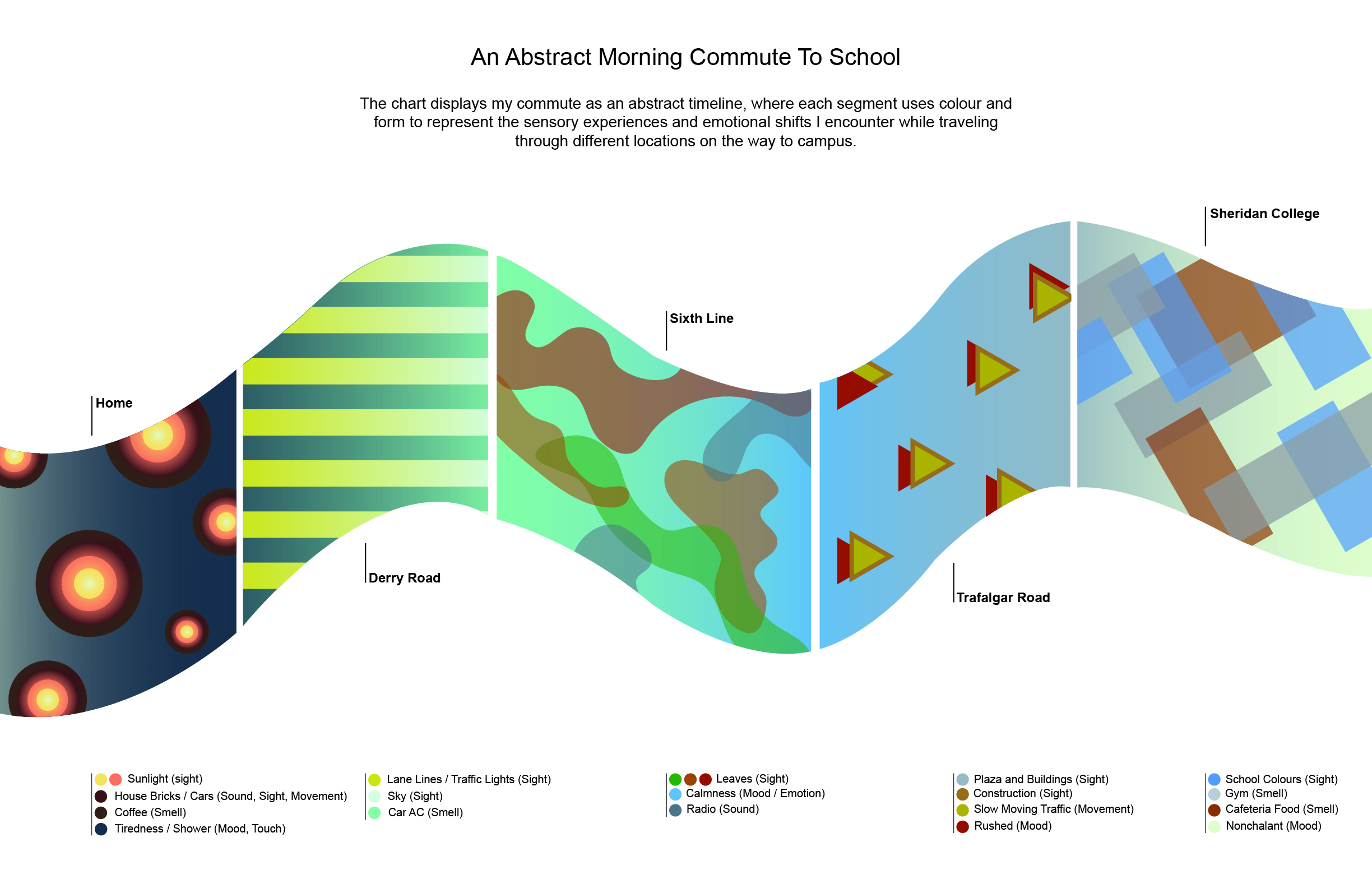
The core challenge in this case study is finding a design method that can translate sensory information into a clear and understandable visual design. A daily commute contains constant shifts in light, weather, sound, temperature, movement, and emotion, yet these qualities do not fit neatly into traditional data charts. This is because the brief emphasizes visualizing an experience rather than numerical values, the problem becomes determining how to represent these impressions in a way that feels coherent, meaningful, and truthful to the nature of the journey. This study explores how an abstract, mood-driven approach can turn lived sensory observations into a visual narrative that communicates the emotional and atmospheric progression from home to campus.
Adobe Illustrator
Mapping A Personal Journey
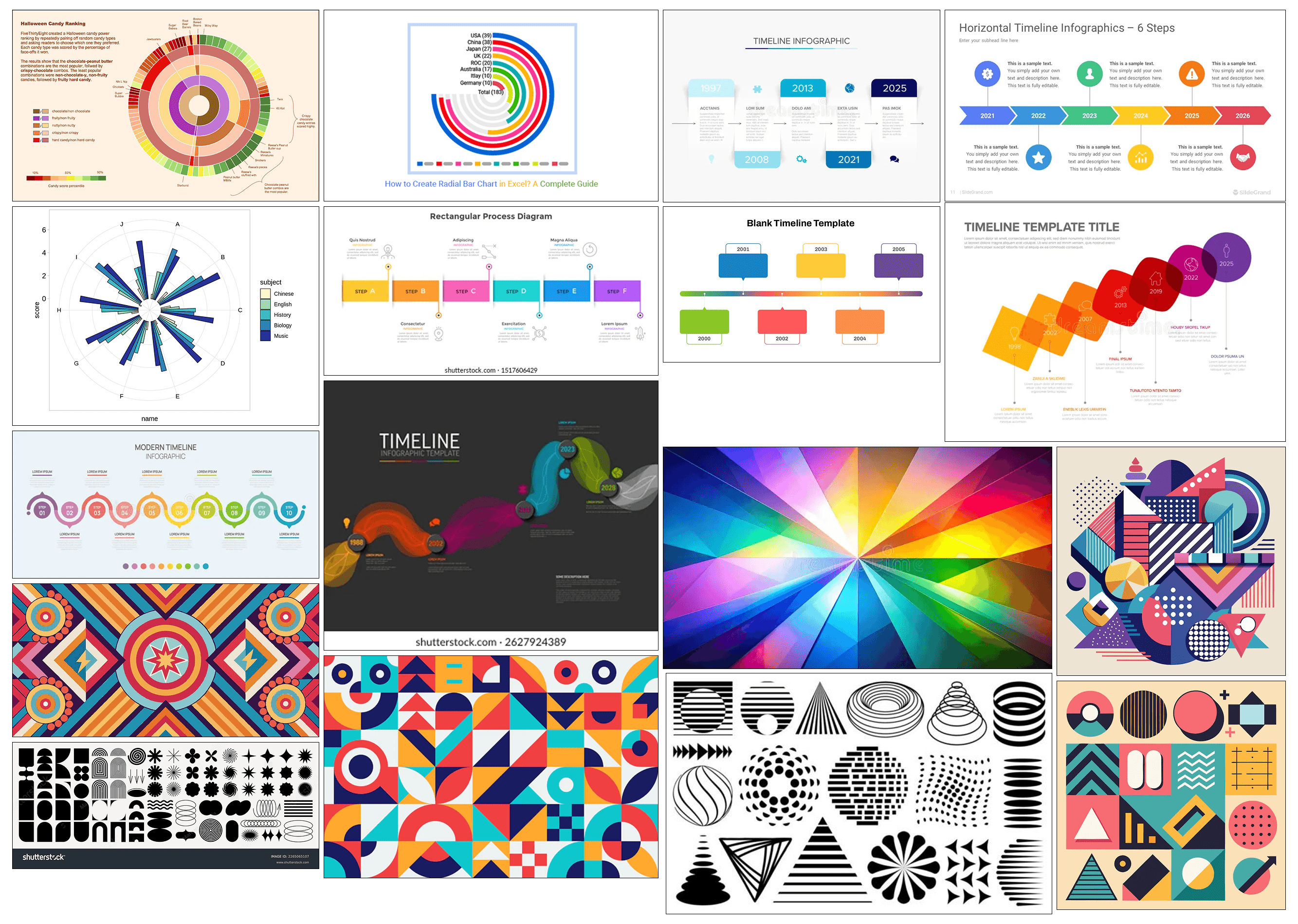
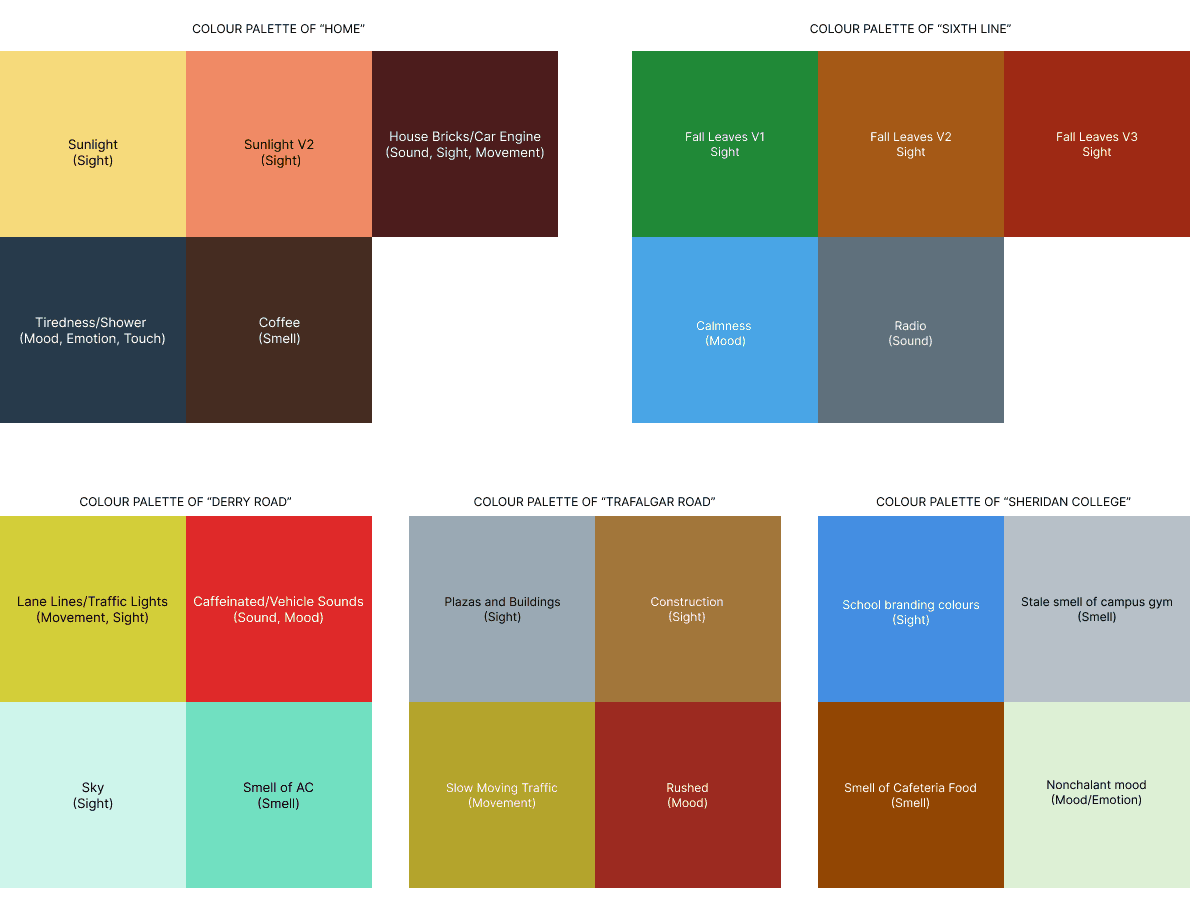
Finding ways to express the locations and roads through colour palettes and moodboards that correlate with the collected data
To understand the morning commute required collecting data in multiple sensory categories such as sight, sound, smell, temperature, movement, and emotional state from home to campus. This sensory dataset established a personal, evolving record of the journey, capturing everything from the cool blues of early light and the texture of traffic noise to the warmth of the car interior and the rising alertness that develops closer to arrival. Creating a moodboard and colour palettes were used for examining how abstract shapes, gradients, and atmospheric palettes communicate rhythm, emotion, and environmental change. This research provided a foundation for translating subjective sensations into a cohesive visual language that reflects the emotional arc and sensory complexity of the commute.
Research and Observation
Early layout exploration focused on finding a structure that could communicate both the sequence and the emotional rhythm of the commute. One approach used a clean left-to-right format, where each vertical band represented a location and the timeline flowed horizontally. This layout emphasized clarity, allowing sensory data to transition smoothly from one stage to the next. Another exploration introduced a radial layout that mapped sensory intensity in multiple directions, showing how sound, temperature, or mood can rise and fall independently rather than follow a simple linear path. A third layout blended structure with expression by using a wavy, abstract “sidewalk” as a timeline, allowing colours, textures, and shapes to guide the viewer from home to Sheridan. Together, these sketches helped determine how structure, movement, and emotion could work as a unified visual system.
Initial Sketches and Layouts
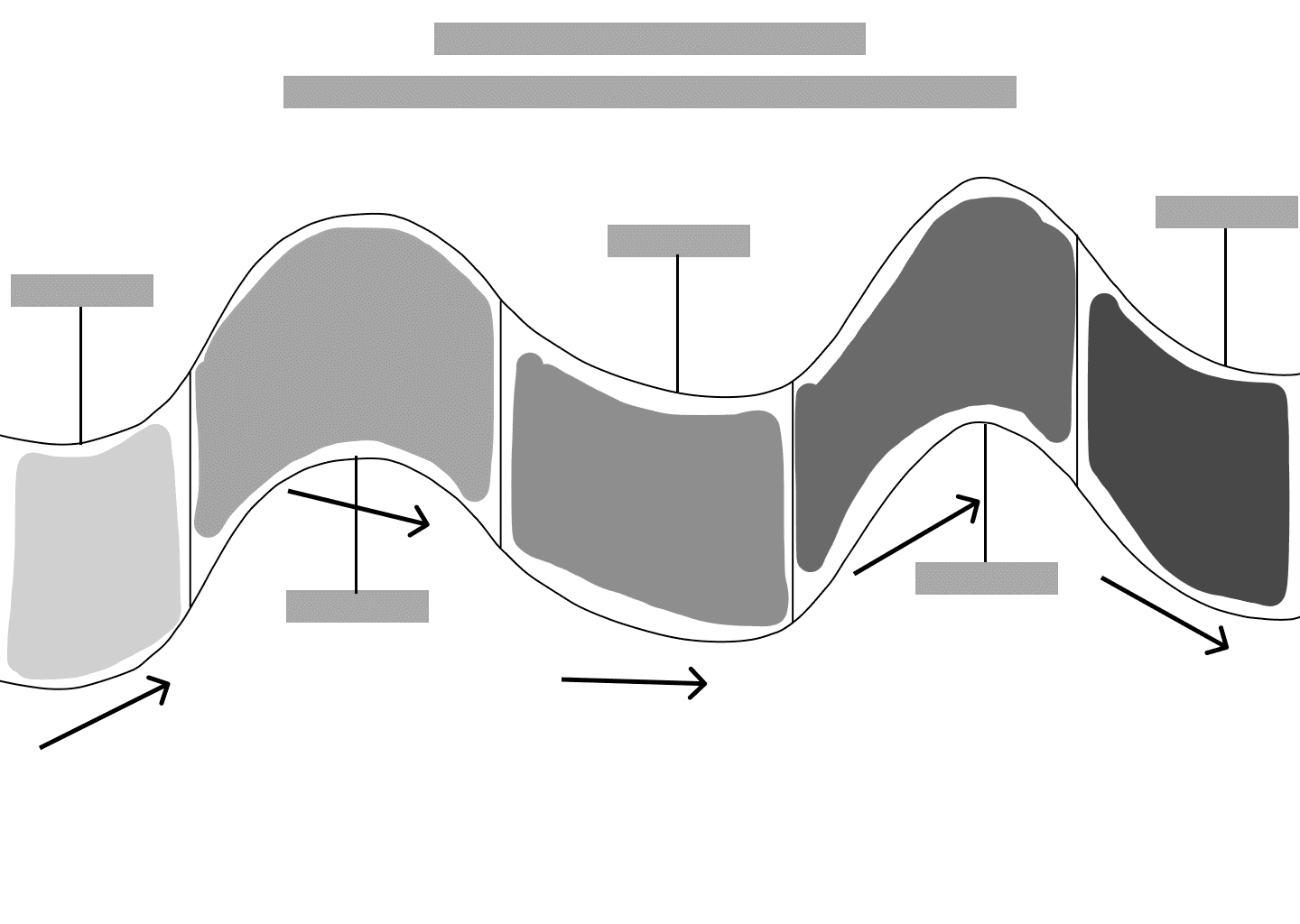
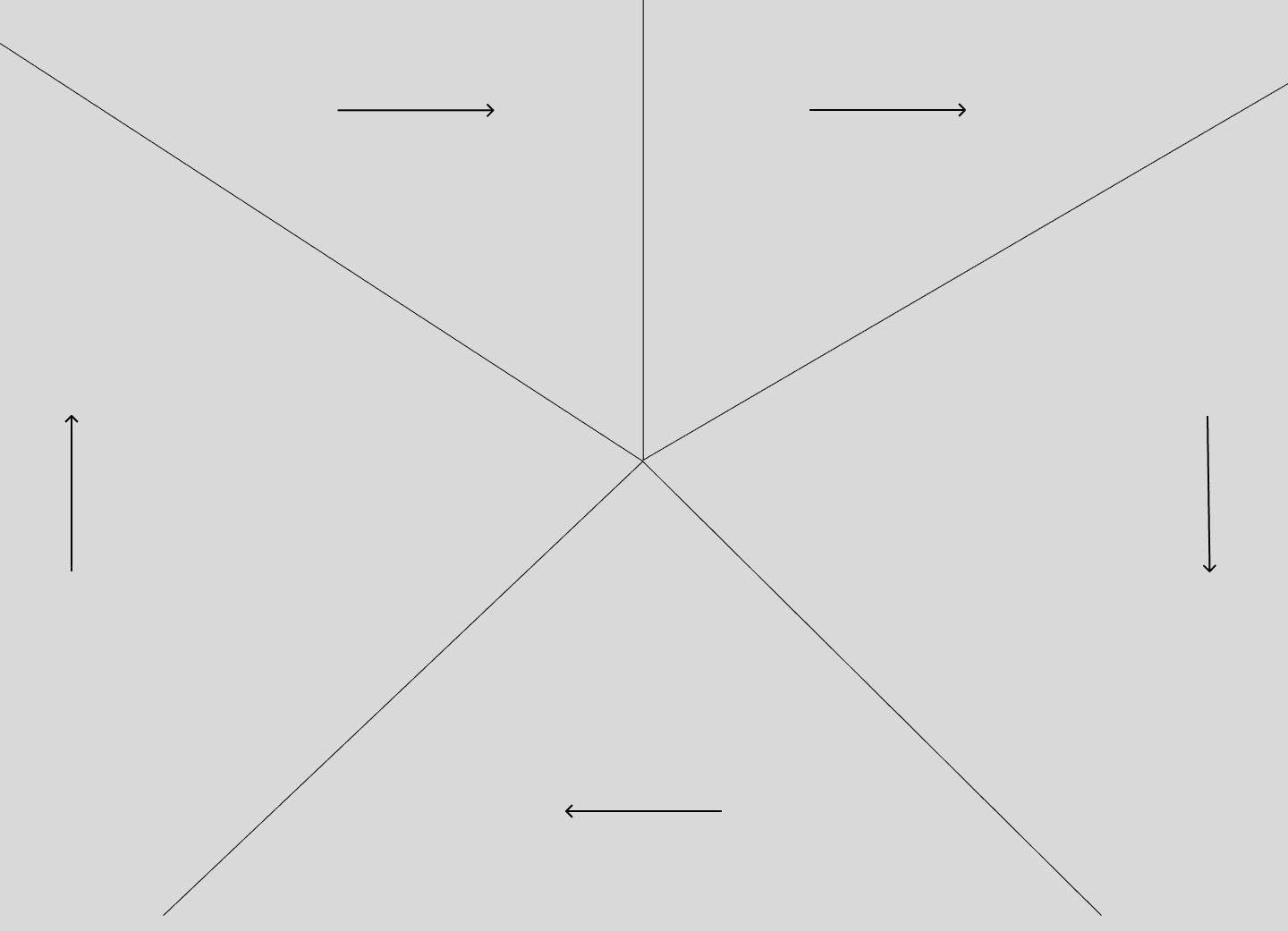
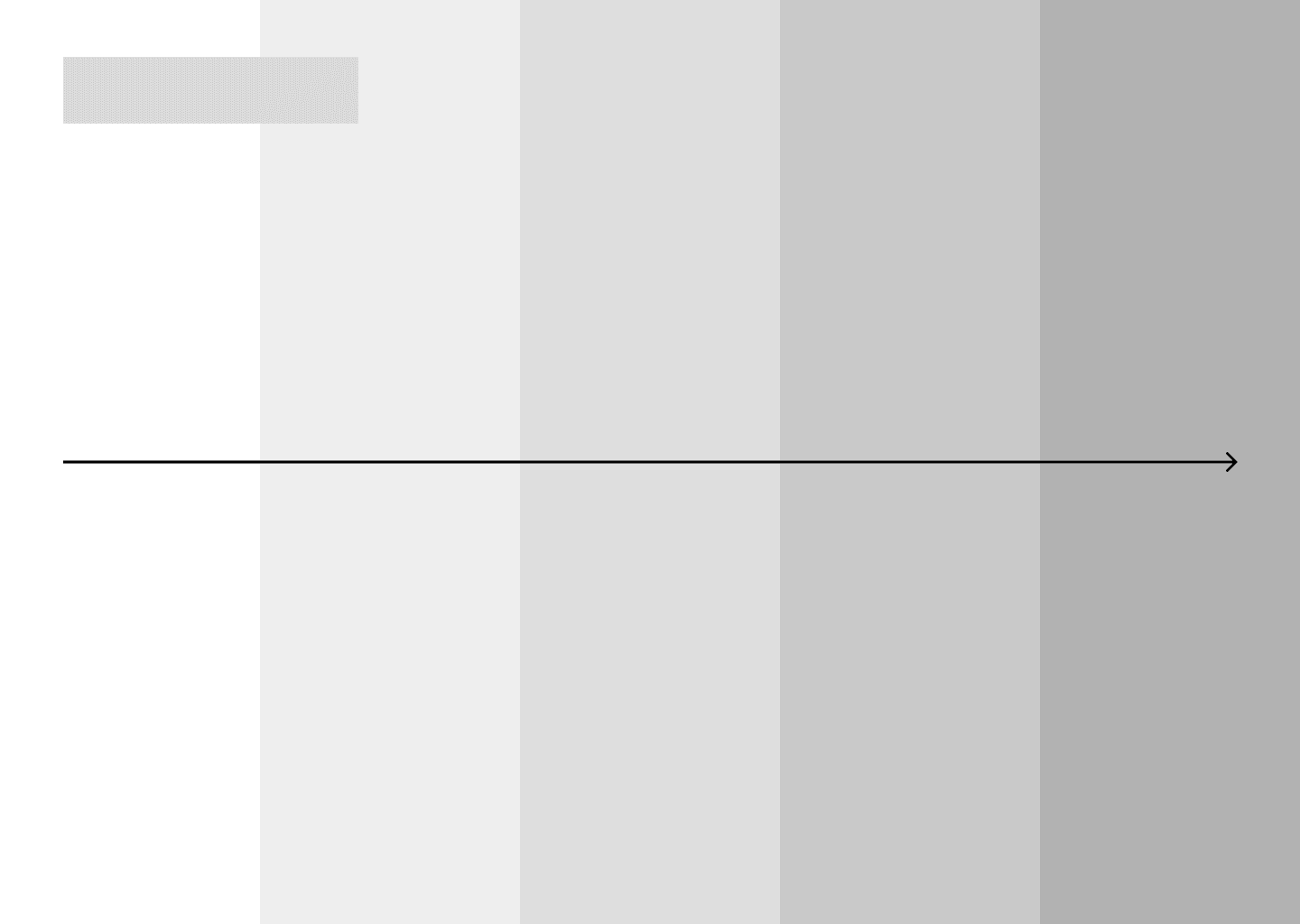
Creating the layouts to best represent the forward movement of the commute
Visual development focused on testing how colour, typography, and shape language could best represent the mood and sensory changes of the commute. Applying each colour palette across the layouts showed how well the colours communicated emotional shifts from the calm tones of home, to the neutral road segments, to the warm focus of arriving on campus. Typography tests with Inter, Lora, and Poppins helped determine which typeface stayed readable across changing backgrounds, with Inter proving the most consistent and clear. Developing visual patterns for each location soft shapes for home, stripes for Derry, organic forms for Sixth Line, sharp angles for Trafalgar, and geometric blocks for Sheridan helped ensure that the emotions and sensory cues remained recognizable in both radial and linear layouts. These explorations strengthened clarity, consistency, and the overall storytelling of the final design.
Visual Developement
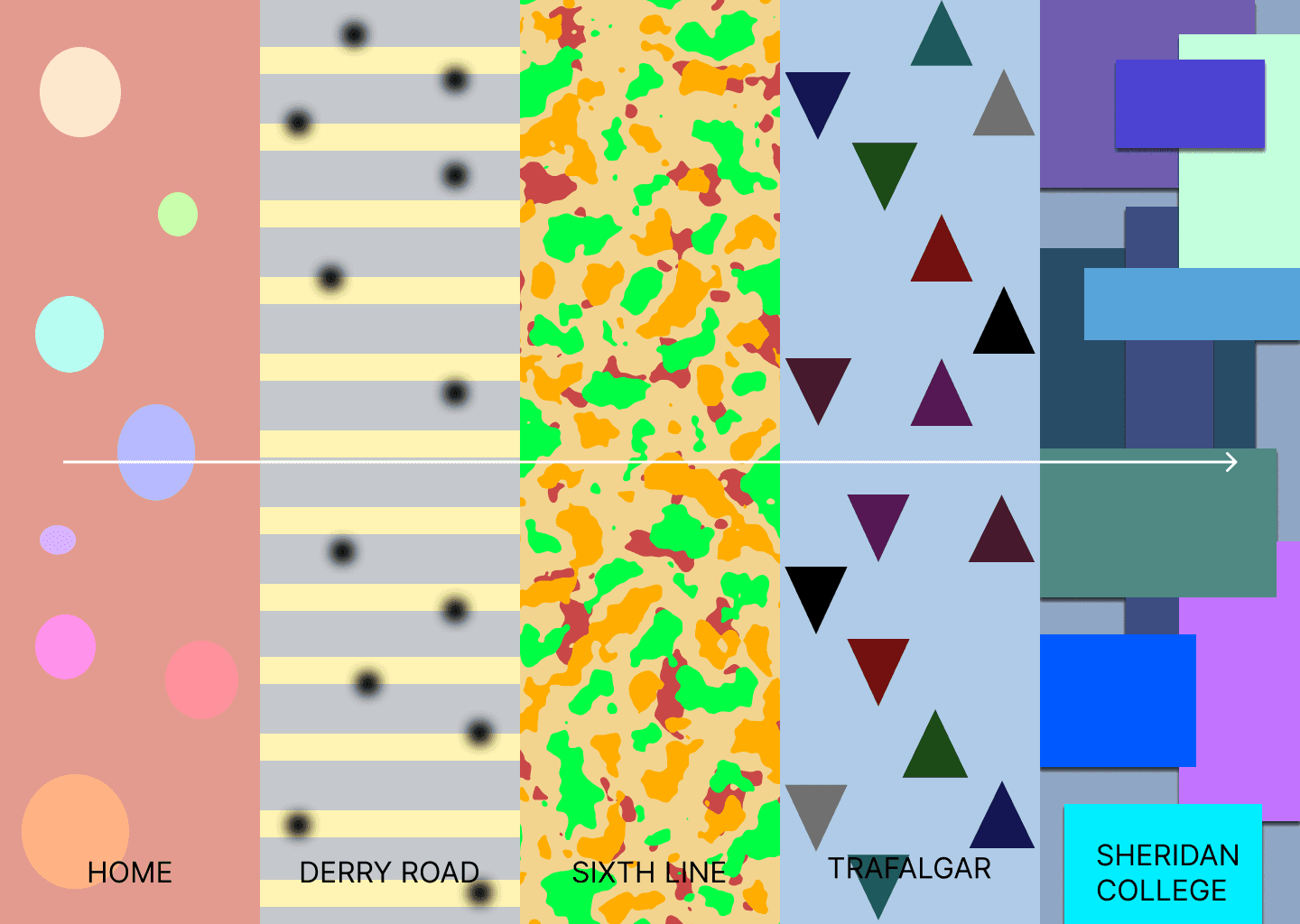
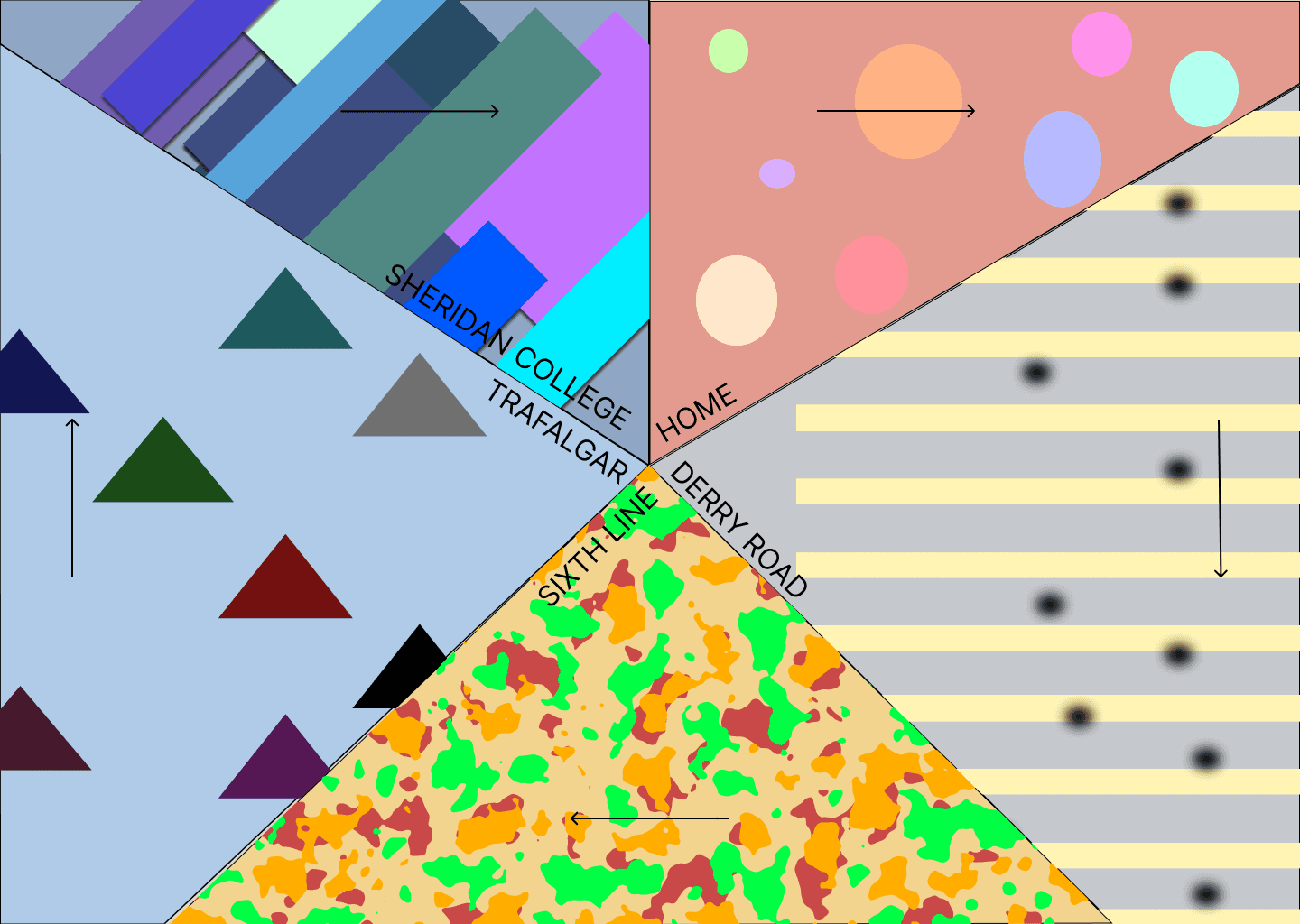
Designing the first iteration of the visuals that connect to each location and road that is present in the journey
Peer feedback highlighted the strengths and limitations of both layout directions, noting that the loop-based structure communicated routine and repetition effectively, while the pentagon-based layout offered a more unique and visually engaging approach. The pentagon design was seen as the stronger concept overall, provided its meaning and narrative were clearly defined. Feedback also emphasized improving legibility and visual hierarchy, as the thin typography blended into the background and made the directional flow harder to follow. Increasing type weight, adjusting sizing, or adding subtle shadows were suggested to strengthen clarity and guide the viewer more confidently through the visualization. These insights informed refinements that focused on clearer labeling, stronger hierarchy, and a more intentional connection between structure and sensory storytelling.
Refinement and Peer Feedback
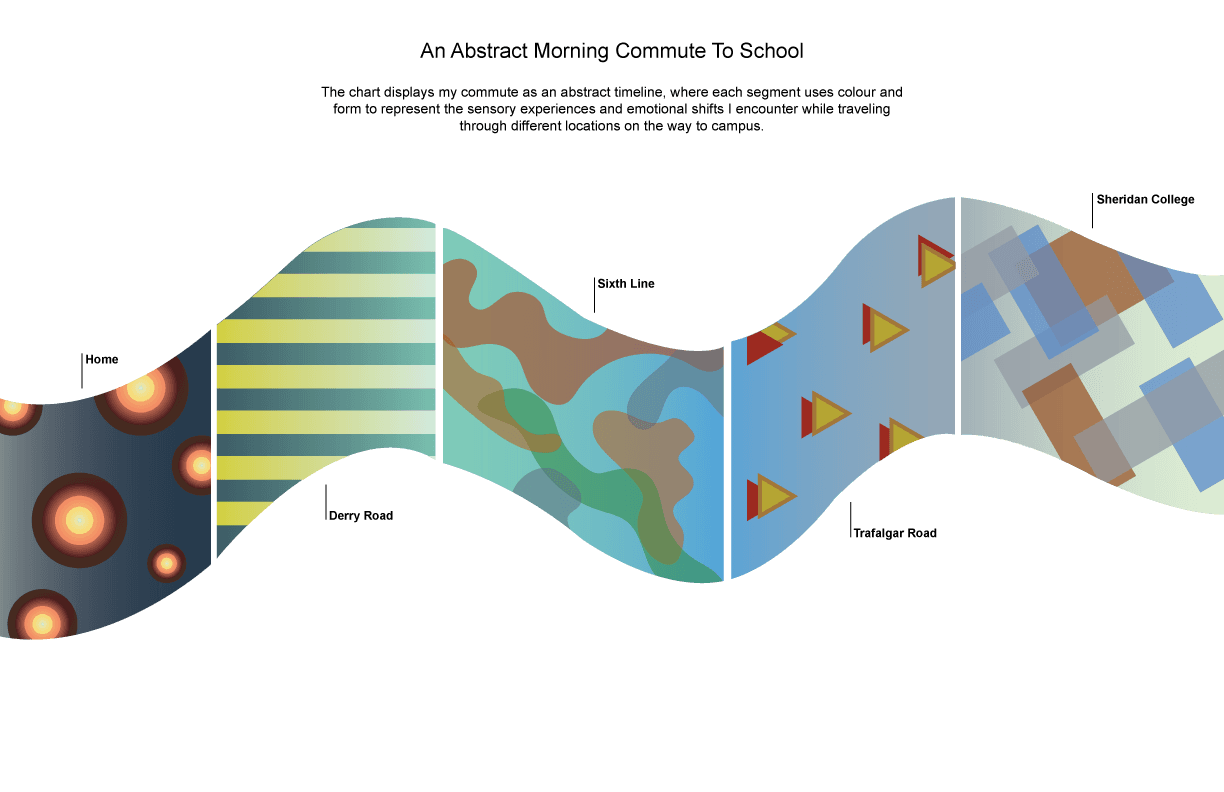
Creating a clearer yet creative roadmap for the journey which will enhance the user's understanding and lower the chance of confusion
The final visualization translates the sensory and emotional rhythm of my morning commute into a clear, linear timeline supported by improved hierarchy, stronger typography, and a refined colour system. Each section uses shapes and palettes directly tied to the collected sensory data, allowing the viewer to understand how mood, atmosphere, and movement shift from home to campus. Peer feedback guided adjustments to clarity and structure, helping the design balance expressive abstraction with readable communication. The final outcome presents a cohesive visual narrative that captures the commute not as a route, but as an evolving emotional experience.
Final Outcome and Reflection