The challenge centered on reimagining the Tim Hortons brand identity through an empathetic lens that contrasts personal values rooted in fine dining with the brand’s fast-paced, convenience-driven culture. While Tim Hortons emphasizes accessibility, speed, and familiarity, its visual identity often lacks the sense of craftsmanship and refined experience found in upscale restaurant branding. This redesign explored how empathy, visual hierarchy, and brand storytelling could elevate a mass-market identity without losing its approachable character. The goal was to create a refreshed logo system that communicates warmth and accessibility while introducing a stronger sense of craft, authenticity, and aesthetic cohesion aligned with contemporary design sensibilities.
Adobe Illustrator
Empathy As A Design Method
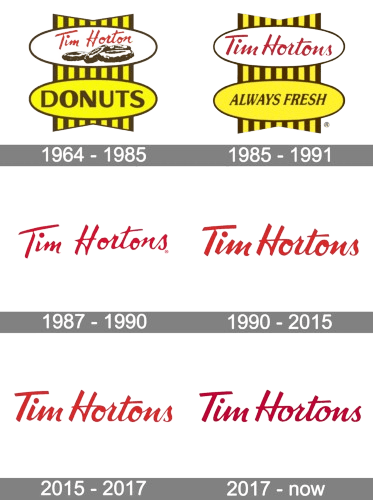
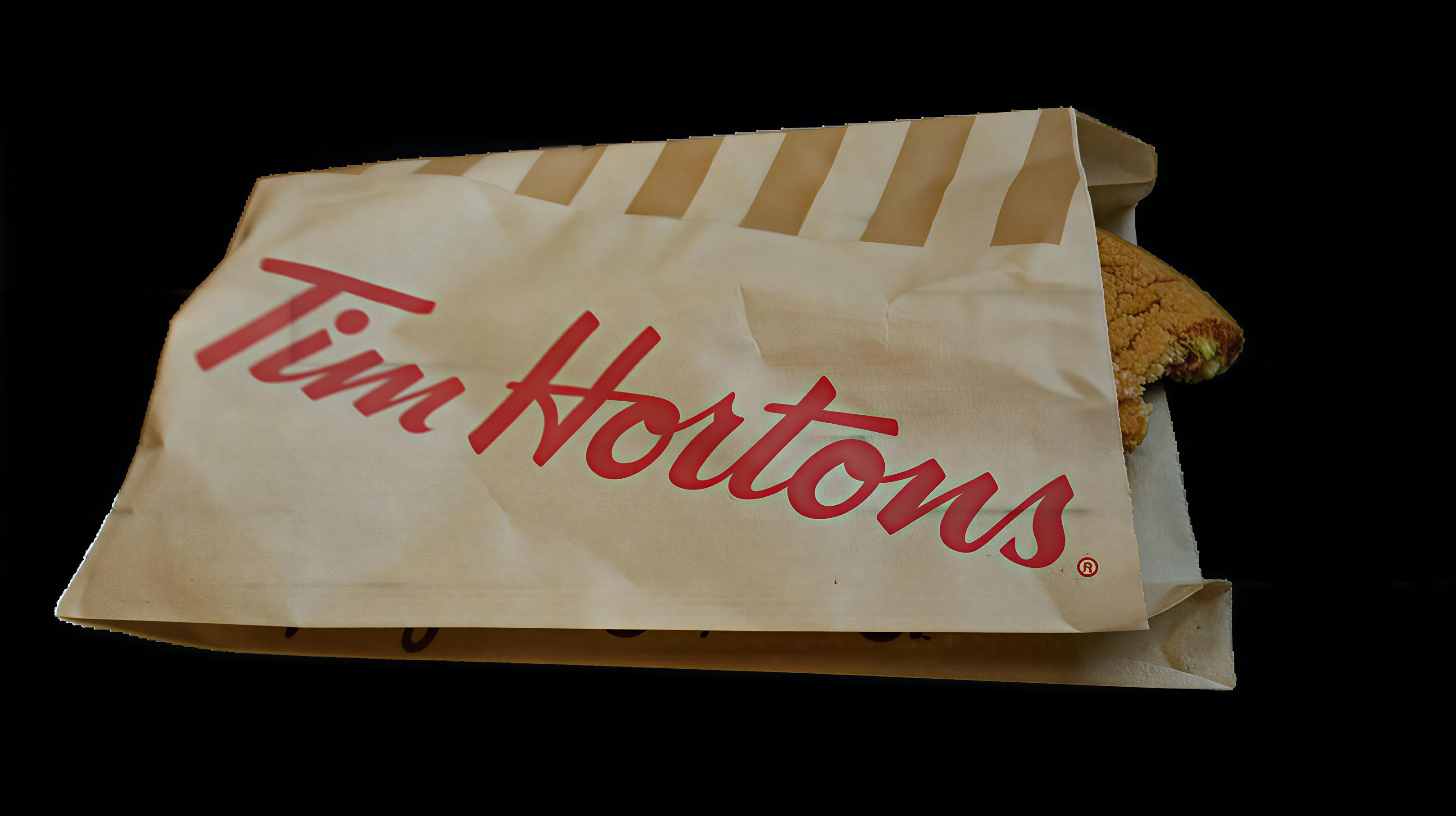

Research focused on analyzing how the Tim Hortons wordmark and logo operate across brand touchpoints, including packaging, signage, and merchandise, to understand its visual consistency and brand presence. Historical exploration of the logo evolution from 1964 to today revealed a gradual simplification toward a more corporate identity while retaining its community-oriented tone. Studying the brand’s core values, such as trust, familiarity, and national pride, highlighted how design choices reinforce a sense of belonging within Canadian culture. Competitive analysis of similar food chains further informed how visual language, color psychology, and typographic treatment communicate personality and position within the fast-food market.
Research and Observation
Understanding the brands past history, logo transformations, and what competitors are like
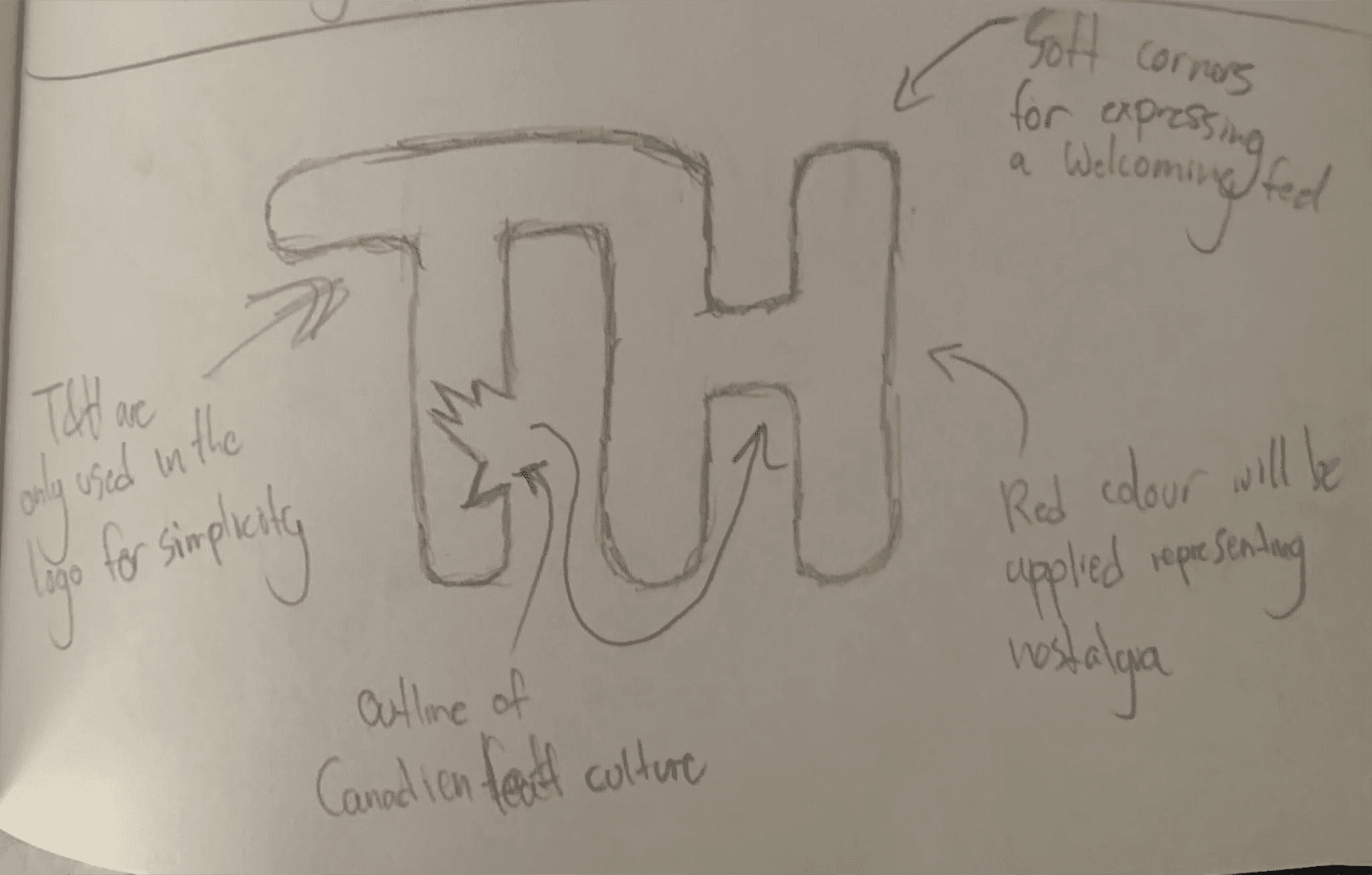


The initial sketching phase focused on experimenting with how typographic form, Canadian symbolism, and brand heritage could merge to create a renewed yet familiar Tim Hortons identity. Early iterations explored variations in stroke weight, curvature, and composition, with feedback emphasizing improved legibility, cultural references, and scalability across packaging and signage. Concepts incorporated national symbols such as the maple leaf, hockey stick, and Canadian Shield-inspired shapes to evoke authenticity and nostalgia, while iterations using coffee cups and donuts aimed to reinforce the brand’s approachable and community-driven character. Through multiple refinements, adjustments to type structure, form balance, and icon integration helped strengthen the connection between the logo’s visual rhythm and the emotional familiarity long associated with Tim Hortons.
Initial Sketches and Layouts
Developing early designs of the rebrand, seeing what could work in later iterations and also being able to reflect the companies identity
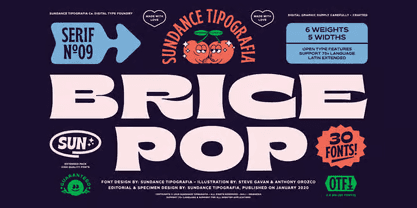
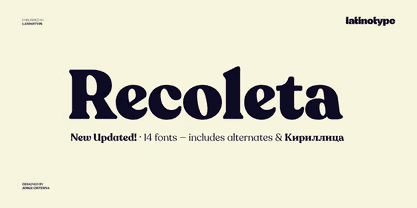
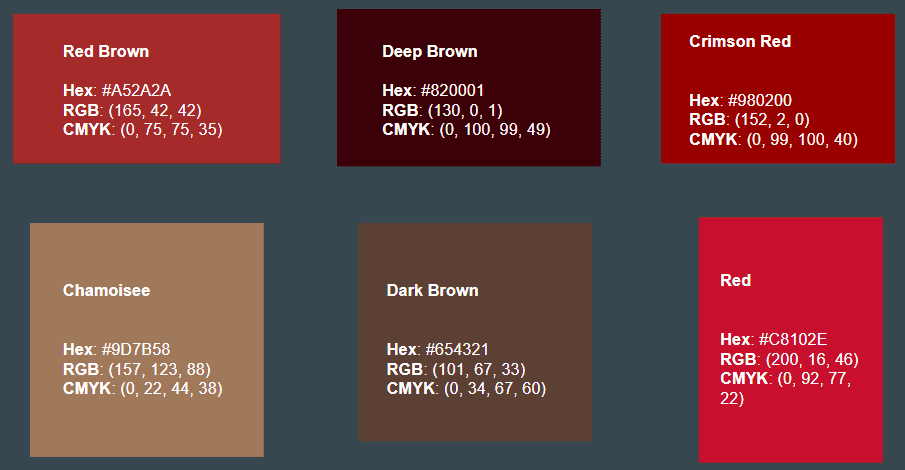
The visual development stage explored how typography, color, and brand direction could reframe Tim Hortons’ identity for a modern audience while preserving its cultural roots. A series of typefaces, including Recoleta, Cardila, and Brice Pop were examined for their expressive qualities, balancing friendliness and legibility to reflect the brand’s approachable tone. Warm hues such as deep browns, crimson reds, and Rosso Corsa were tested to maintain familiarity while introducing vibrancy and visual depth suited for digital and print applications. This phase emphasized visual storytelling through form consistency, typographic personality, and color psychology, ensuring that the redesigned logo communicated community, comfort, and Canadian pride in a refreshed and contemporary way.
Visual Developement
Exploring the brand's existing colour palette, seeing what will work well with the new typography
During the refinement stage, peer feedback guided adjustments in color harmony, contrast, and visual balance to ensure the wordmark’s adaptability across print and digital media. Multiple iterations tested variations of stroke and fill combinations using warm reds, browns, and neutral tones to identify which palette best reinforced the brand’s familiarity while enhancing clarity and emotional warmth. Feedback emphasized maintaining strong contrast for legibility while preserving the brand’s approachable, community-driven identity. The final refinements unified typographic weight, color contrast, and brand symbolism, resulting in a wordmark that feels both contemporary and rooted in Canadian tradition.
Refinement and Peer Feedback
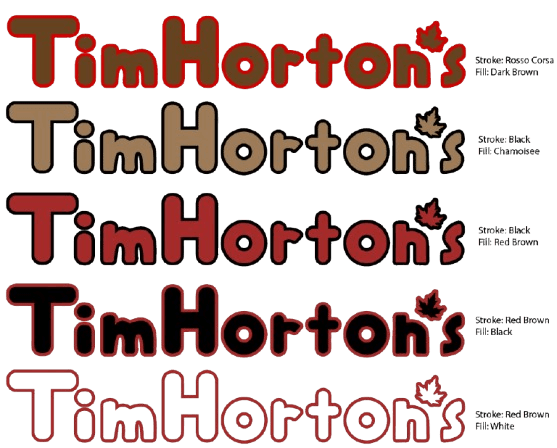
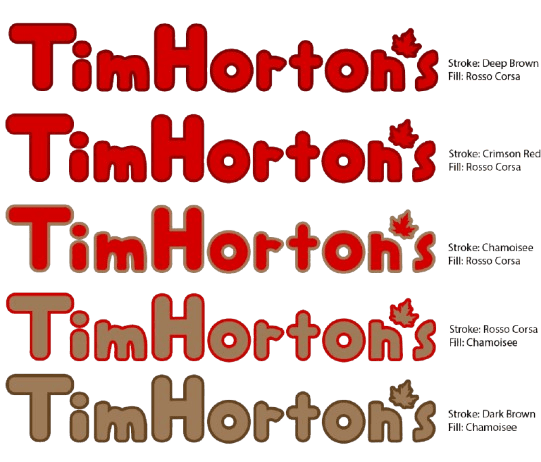
Applying feedback from peers to ensure the newly designed logo aligns with the companies morals and identity

The final logo redesign reimagines Tim Hortons’ identity with a bolder, more geometric wordmark that emphasizes approachability and national pride. Rounded letterforms and soft edges create a friendly, human-centered tone, while the iconic maple leaf subtly reinforces Canadian heritage without overwhelming the composition. The choice of a deep red hue enhances visual consistency and aligns with the brand’s established color psychology of warmth and trust. Compared to the original script logo, this modernized version prioritizes legibility, scalability, and brand recognition, presenting a refreshed identity that feels both contemporary and authentically rooted in the community-driven spirit of Tim Hortons.
Final Outcome and Reflection